


Blog
The Future of Bespoke Design

The Future of Bespoke Design
Contract, bespoke, and new ways of living
A conversation with Massimo Chelini
In recent years, the high-end interiors industry has undergone a profound shift.
The very concept of “product” is giving way to a new idea of “project”: more integrated, more customized, and closer to architecture.
Where the market once drew clear distinctions between industrial production, customization, and contract, those boundaries are now dissolving.
Private villas, luxury residences, high-end hospitality, and large-scale international developments all demand one thing: solutions that are conceived, engineered, and crafted around the specific identity of a space.
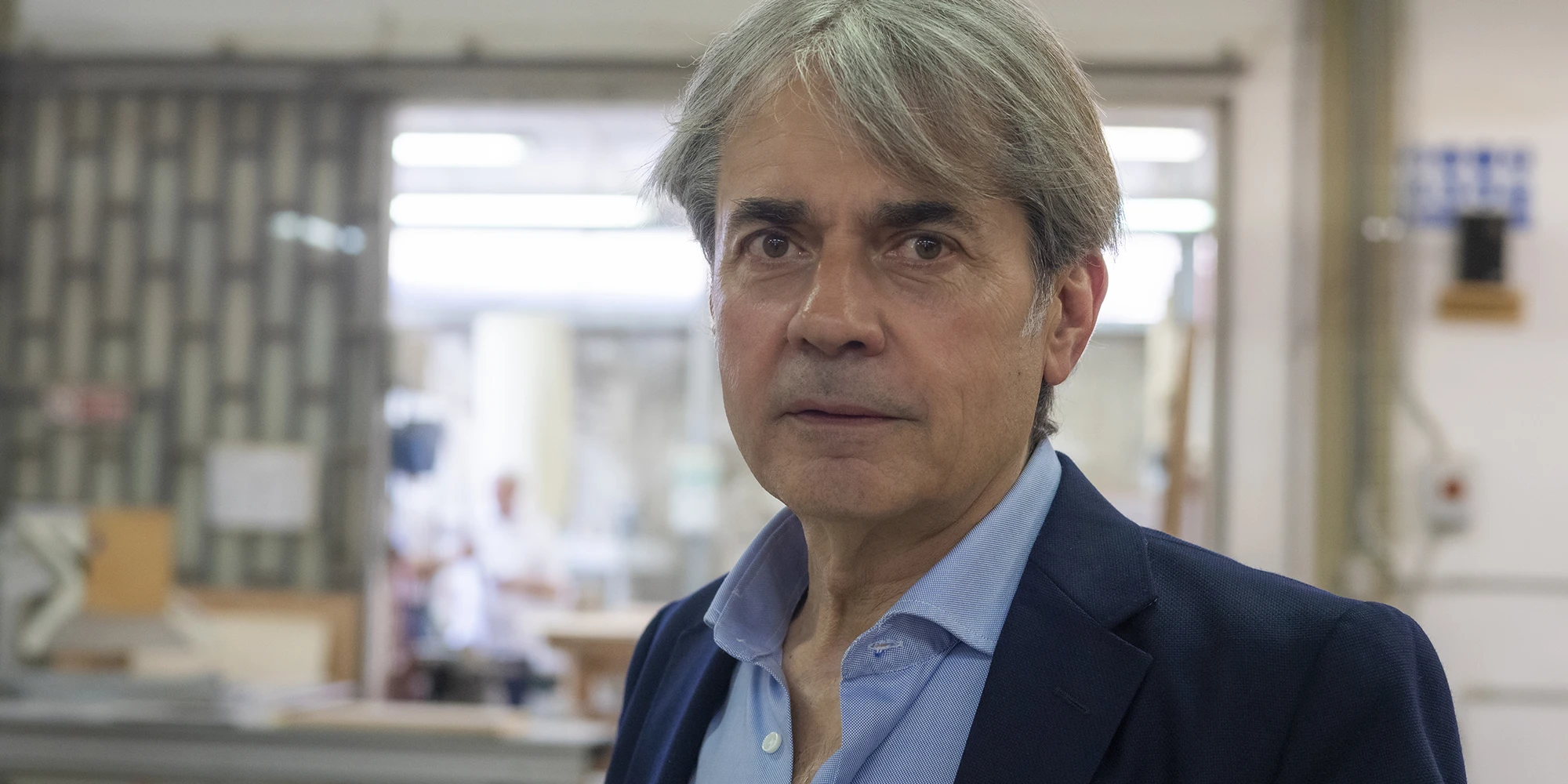
To explore this evolution, we spoke with Massimo Chelini, founder of MC Bespoke, an Italian atelier specializing in bespoke interiors for residential and contract projects worldwide.
INTERVIEW WITH MASSIMO CHELINI
Where contract and bespoke are heading
The bespoke and high-end contract sectors are evolving rapidly. New materials, advanced technologies, and a closer integration between design and production are reshaping how spaces come to life.
We asked Massimo Chelini, founder of MC Bespoke, to share his perspective on the forces driving this transformation, and what lies ahead.

Materials, complexity, and new design possibilities
In recent years, the bespoke furniture and high-end contract world has been changing rapidly. From your perspective, what are the most significant transformations shaping this sector?
“Today, there is a much broader exploration of materials. The real challenge is not choosing a material—it’s knowing how to combine them,” Chelini explains.
“The ability to create harmony between very different materials is what truly sets a project apart.” According to Chelini, the future of the sector lies precisely in this: the ability to manage increasingly complex design challenges, where aesthetics and technical performance must coexist seamlessly.
“Even something as simple as a lamp can take on a completely different value depending on how it’s designed and built.
It’s all in the details – the craftsmanship, the structure, the way elements come together.”
Rethinking the relationship between architects and manufacturers
More and more architects and real estate developers are seeking partners capable of delivering highly customized projects. How is the relationship between designer, company, and client evolving today?
“Architectural firms often develop the concept, but not the full technical detail. That’s where we come in.”
Execution is no longer a secondary phase – it’s where real value is created.
“Companies without a strong technical backbone will struggle. Today’s projects demand cross-disciplinary expertise and the ability to manage complexity with credibility. The ability to translate an idea into a buildable project is essential, demonstrating tangible skills and technical capabilities to support the partner, without compromise.
This has led to a significant shift:
the relationship between architect and manufacturer has become direct, continuous, and strategic.
“Architects must choose partners capable of adding value to the project.
It is not just about execution, but about improving what has been envisioned.”
What “custom” really means today
The concept of “custom” is becoming increasingly central in contemporary design. What are clients really looking for today when they request a bespoke project?
“Over the years, we have understood that what really matters in custom projects is that clients want to feel the space as a place of belonging, where they can experience the pleasure of being surrounded by objects that reflect their essence.
This is our mission: to interpret and deliver what is shared with us in the best possible way, using the finest materials available.”
Bespoke today is no longer just personalization – it is identity.
“A bespoke project must give the client something that cannot be replicated.
It is not only about aesthetics, but about experience and uniqueness.”
In an increasingly global market, that uniqueness is the ultimate form of luxury.
Switzerland as a strategic hub
MC Bespoke recently expanded its international presence with a new office in Mendrisio. What are the reasons behind this choice?
“Switzerland offers a unique concentration of opportunities,”Chelini explains.
“It connects us directly with key players, from leading architecture studios to international developers.”
More than just an operational base, the new location acts as a strategic bridge (towards new opportunities and projects that we are fully equipped to manage without any logistical or operational constraints)
“It allows us to engage with global markets in a more structured and effective way, opening up new possibilities for growth.”
Looking ahead: digital, innovation, and methodology
The future of the industry will be shaped by technology and innovation
“In the past, it was possible to operate with more traditional structures. That won’t be the case moving forward.”
The shift is already underway.
“The companies that will remain competitive are those that invest in digital tools and internal innovation.”
We are already witnessing significant evolution in both design and client expectations. The growing influence and use of AI is reshaping certain aesthetic standards in interior design. While this often results in striking environments, keeping pace with this new era requires projects to be managed with equally advanced tools, technologies, and expertise. At the same time, the role of companies, those who physically realize these visions, is to engage with designers and critically assess feasibility, especially when certain ideas may compromise quality or functionality.
One key trend stands out: integrated design.
“BIM and advanced digital tools will become standard. Those who fail to adopt them will find it increasingly difficult to compete.”

Conclusion
The conversation with Massimo Chelini points to a clear direction: the worlds of contract and bespoke are converging into a model defined by complexity, technical expertise, and design vision.
Delivering quality is no longer enough.
What matters today is the ability to interpret, develop, and elevate every project.
That is where real value is created.